Gale Ranch and Windemere Share a School District. They Don't Share a Bill.
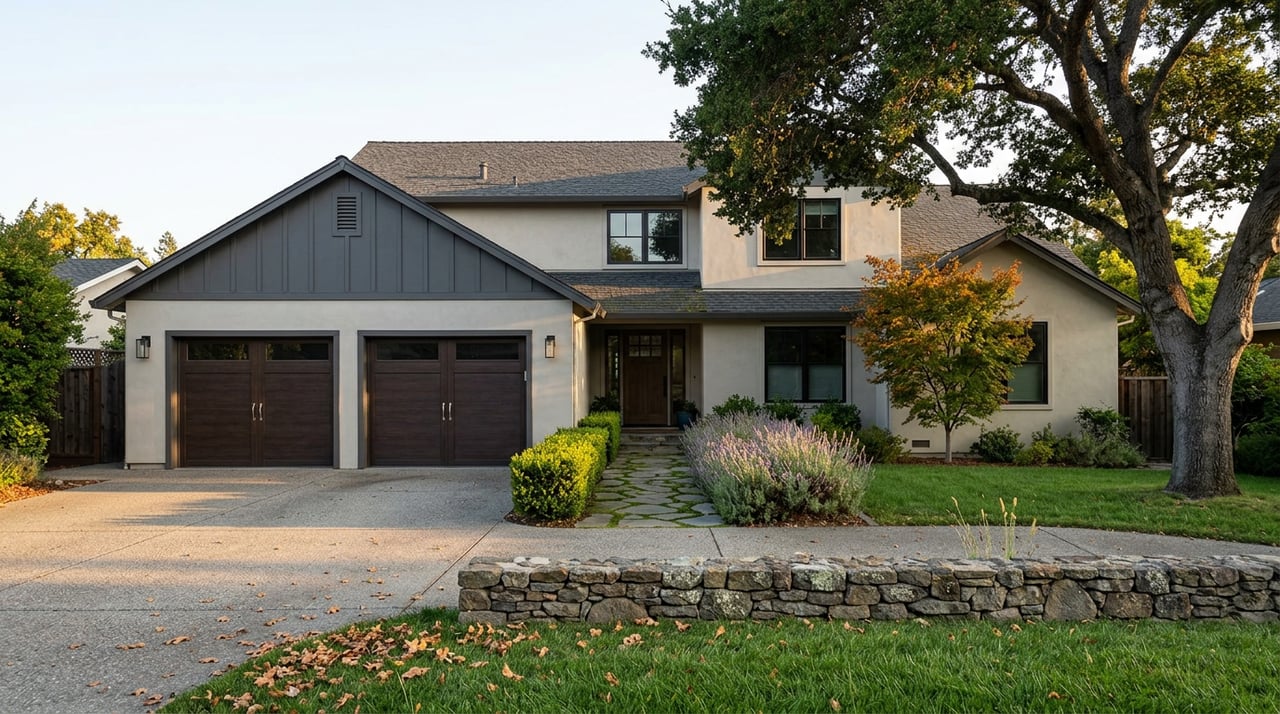
Pull up two San Ramon listings side by side. One sits in Gale Ranch, maybe in the Terravista or Belvedere tract. The other is in Windemere, a few minutes up Bollinger Canyon Road. Similar square footage, similar age, same San Ramon Valley Unified schools feeding both addresses. The list prices land close enough that a buyer could reasonably treat them as interchangeable.
They are not. Scroll past the photos to the disclosure package and the two homes start charging for very different things. One carries a homeowners association fee set by a private board. The other carries a special tax line on the county property tax bill, tied to bonds that were sold decades ago to build the streets, parks, and schools the neighborhood sits on. Same valley, same era, two different financing plans baked into the dirt before either house was framed.
Gale Ranch and Windemere both grew out of San Ramon's Dougherty Valley buildout, the master-planned expansion that turned open hillside into thousands of new homes starting in the late 1990s and 2000s. But the developers who built them chose different tools to pay for infrastructure.
Gale Ranch runs on a conventional homeowners association model. The city of San Ramon's own GIS mapping identifies it plainly: the Communities of Gale Ranch HOA, made up of seven distinct neighborhoods, Avanti, Belvedere, Coronado, Gallery, Monarch, Solaire, and Terravista, each with its own sub-association layered under a master HOA. The master association's current published dues sit at a modest annual figure, but that number is only the top layer. Several of the seven tracts, including Coronado, run their own separate community association with its own dues and rules on top of the master fee. A buyer who only checks the master HOA number and stops there is missing part of the bill.
Windemere took a different route. It was developed under a Community Facilities District, the legal structure created by California's 1982 Mello-Roos Act. Instead of a homeowners association collecting private dues, a CFD issues bonds to pay for roads, parks, and school facilities up front, then bills each parcel a special tax every year until those bonds are retired. That tax shows up as its own line on the county property tax bill, not as a check written to a management company. Some smaller pockets within Windemere do run modest sub-HOAs on top of the CFD structure, but the core financing mechanism for the neighborhood's infrastructure is the special tax, not a homeowners association.
Neither approach is a red flag. San Ramon's use of Mello-Roos financing has already survived a legal challenge. In 2016, a California court of appeal upheld the city's authority to form a CFD and levy a special tax on new development, rejecting an industry group's argument that the charge amounted to an improper general tax. The Western City Magazine account of that ruling is worth a read if you want the legal reasoning, but the practical takeaway for a buyer is simpler: this financing tool is settled law in San Ramon, and it is not going anywhere.
Here is where the comparison gets useful instead of just interesting. A homeowners association fee and a Mello-Roos special tax behave differently over time, and that difference matters more the longer you plan to own the home.
| HOA (Gale Ranch's model) | CFD / Mello-Roos (Windemere's model) | |
|---|---|---|
| Where it appears | Separate bill from a management company | Line item on the county property tax bill |
| Who sets the amount | A homeowner-elected board, can adjust with notice | Fixed by a formation document called the Rate and Method of Apportionment |
| How it changes | Can rise based on budget needs and reserve studies | Can escalate on a preset schedule, often capped around 2% a year |
| Prop 13 treatment | Not a tax, not affected by Prop 13 at all | Sits outside the 1% Prop 13 cap because it is a special assessment, not an ad valorem tax |
| Does it end | No, continues as long as the association exists | Yes, ends when the underlying bonds are paid off, typically 25 to 40 years from formation |
That last row is the one most buyers miss. An HOA fee is permanent by design. It exists as long as the association governs the community, and it can go up as reserve needs and insurance costs rise. A CFD special tax is a debt repayment schedule with a finish line. Once the bonds behind a specific Windemere district are retired, that portion of the tax bill drops off, sometimes significantly. A homeowner buying into a CFD five years before payoff is in a very different position than one buying in year three of a forty-year bond term, even if the dollar amount on this year's bill looks identical.
This is also why lenders treat the two costs the same way but buyers should not. Mortgage underwriting folds both HOA dues and Mello-Roos special taxes into your monthly housing expense for debt-to-income calculations. A $300 monthly HOA fee and a $300 monthly CFD allocation hit your qualifying power identically. But only one of them has a plausible expiration date built into public bond documents.
Citywide averages will not tell you what a specific parcel owes, and neither will a general sense of "Gale Ranch has an HOA, Windemere doesn't." The only reliable path is the paperwork tied to that address.
Framing this as which neighborhood "wins" misses the point. Gale Ranch's HOA model buys predictable governance and shared amenities managed by neighbors who vote on budgets. Windemere's CFD model buys infrastructure that was paid for up front through bonds, with a tax that is legally capped in its annual growth and that eventually ends. One is a permanent private arrangement. The other is a public financing tool with a built-in sunset clause. Both sit inside the same school district, both draw on the same trail network off Bollinger Canyon Road and East Branch Parkway, and both land in a similar price range depending on tract and timing.
What changes the math is how long you plan to stay and how you weigh a fee that never expires against a tax that eventually will. That is not a detail most listing sheets spell out, and it is exactly the kind of thing worth understanding before you are three weeks into escrow.
Does the Mello-Roos tax on a Windemere home ever actually go away? It can, once the specific bonds backing that parcel's district are retired. Terms commonly run 25 to 40 years from formation, and the Rate and Method of Apportionment document for that district will state the payoff year. Ask for it directly rather than assuming a flat rate forever.
Is the Mello-Roos tax deductible the same way as my base property tax? Deductibility depends on how the specific tax is structured and current federal rules, and it is not automatic. Speak with a tax professional about your situation before assuming it is.
Does every home in Windemere skip the HOA entirely? Not quite. The core neighborhood was built under the CFD framework rather than a master HOA, but a few smaller pockets within Windemere run their own modest sub-associations on top of that structure. Confirm at the parcel level rather than assuming the whole neighborhood works one way.
If you are comparing Gale Ranch, Windemere, or any other San Ramon neighborhood and want someone to actually pull the tax bill and the CFD paperwork before you write an offer, Black Rose Real Estate can walk through it with you. Let's Talk.
Stay up to date on the latest real estate trends.
You’ve got questions and we can’t wait to answer them.